From Mandela to Macclesfield, I keep finding hope!
Liam Purcell reflects on his first year (and a bit!) as chief executive of Church Action on Poverty
I stepped into the role of Chief Exec here at Church Action on Poverty in July 2025. So in July 2026, I thought it would be a good time to look back at what I’ve learned during my first year in post, and share some stories and reflections.
My first reflection is that this is a very busy and challenging time for us, because it’s taken three months to find the time and headspace to write these thoughts down!
Beyond the strategic and economic challenges facing small charities right now, we’re also dealing with a growing sense of division and distrust in our communities. That’s often most obvious in the excluded and forgotten communities we work alongside.
So I’ve been thinking a lot about how we can work with people to tell a different story, and to build hope. And I’ve also been exploring what distinctive response Church Action on Poverty can offer in that context. What is it that’s special about this organisation? What do we bring to the wider anti-poverty movement?
"Connections give me hope. And I think building community across divides is the way to overcome the hatred and distrust that’s spreading."
Liam Purcell
Chief executive at Church Action on Poverty
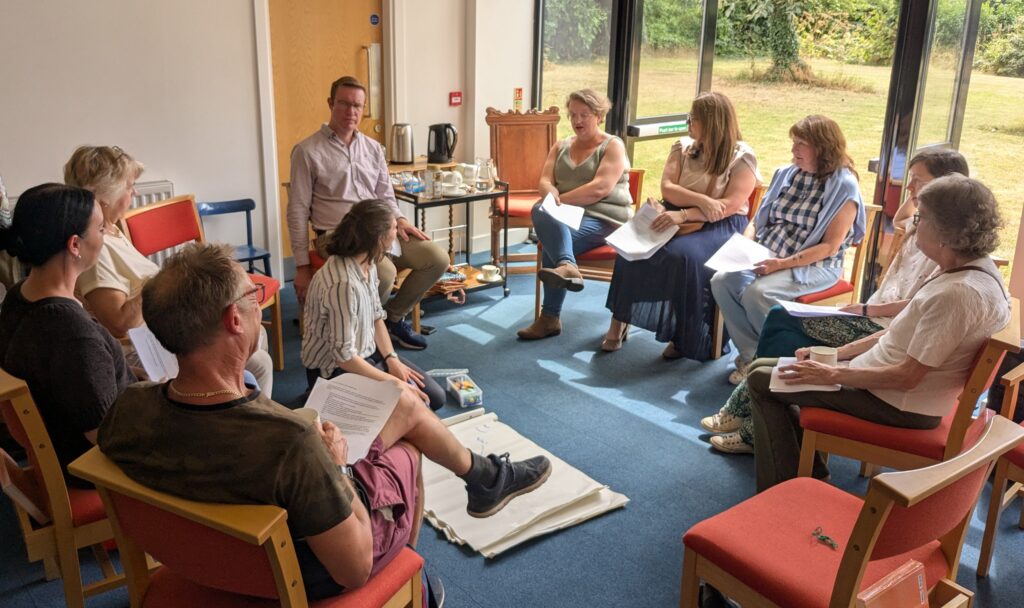
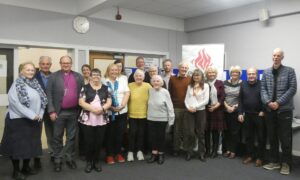
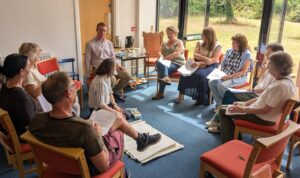
Your Local Pantry listening project at The Core Pantry in Macclesfield, July 2026
I’ve found answers to all those questions in the same place: building community and building connection. Church Action on Poverty’s role has always been about building connections. We always work in partnerships and seek to grow a wider movement, building connections between people, churches and projects.
And we help people to make connections of other kinds too. Connections between the local and the national. Connections between particular stories of poverty and the wider unjust structures that create them. Stronger connections between churches and the communities around them.
All of those connections give me hope. And I think building community across divides is the way to overcome the hatred and distrust that’s spreading.
Looking back over this first year, I recollect several connections in particular that give me hope.
During the summer, I accompanied members of Core Pantry in Macclesfield as they met their local MP Tim Roca. They spoke powerfully about the challenges facing their community, and had a creative discussion about possible solutions. The MP listened carefully as they spoke of how their community felt disconnected from many council initiatives, while they had a sense of belonging and connection with their Pantry.
One group member, Rachel, said: “I like having the opportunity to make change. I want to see big change for young people. It can feel overwhelming, but it felt good, hearing how our MP will follow up. It’s encouraging to hear what’s already being looked at, and the connections we can make. I’d encourage people in other Pantries to get involved.”
The thousands of Pantry members across the UK have huge potential to be agents of change in their Pantries and communities. I hope we can support more of them to connect with local decision-makers and work together for change.
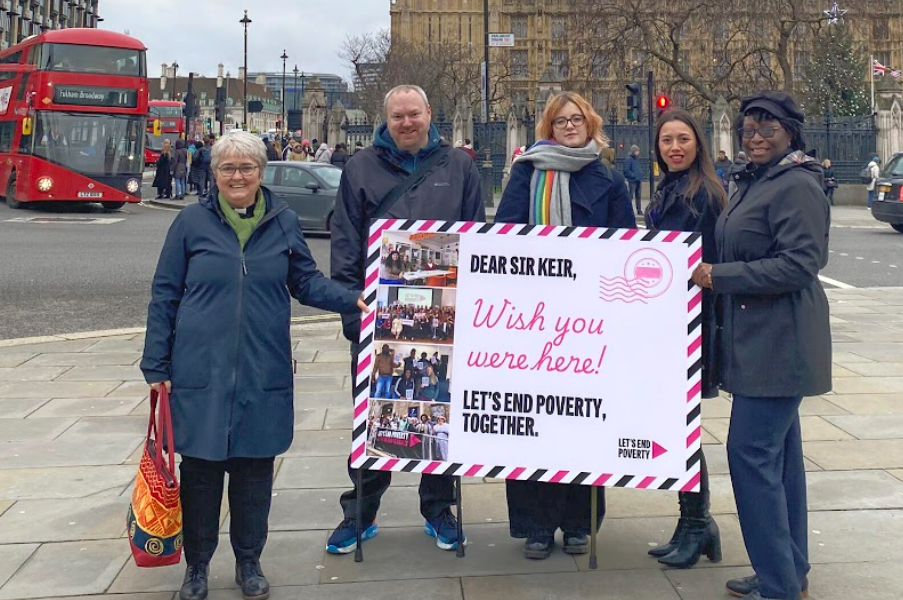
We supported people to write to Sir Keir Starmer in 2024. Now people are also writing to his successor, Andy Burnham.
More recently, we’re working on the next stage of another project that helps people communicate their experience of poverty to politicians. We supported a group of people to write letters to Keir Starmer as he took power two years ago. Now we’re working with the same group to send updated messages to Andy Burnham, drawing on support from Cat Smith MP and building on connections we made with Burnham while he was Mayor of Greater Manchester.
Our connections with churches are also really important. I’ve learned this year how many church leaders value Church Action on Poverty’s role as a catalyst, linking together projects in different traditions and regions, and offering radical new perspectives on the church’s mission to transform unjust structures.
I’ve loved working with the Methodist Church on how they live out principles of economic justice, and with the United Reformed Church on their strategy A Church With People at the Margins. I’m also excited about From Access to Action, our new training workshop that introduces more participatory ways of working to churches.
And our most ambitious attempt to build new connections is Just Church. We hope this new programme will allow us to have much stronger relationships with local churches, helping them celebrate the impact they make by working for justice, and also to make new commitments. But it’s not just a Church Action on Poverty programme – I’ve loved working with many other partner organisations so that Just Church will connect churches with their brilliant work too.
Developing the programme has been a great way to strengthen our links with some churches doing amazing work, who will be our first Just Churches. For example, Parson Cross Initiative in Sheffield, where pioneer minister Nick Waterfield said, “We have signed up to Just Church because we need to seek justice through our actions, and not just talk about it. As Nelson Mandela famously said: ‘Do not look the other way; do not hesitate. Recognise that the world is hungry for action, not words’.”