Changing the changers: What happens when we start listening?

How can people be empowered to make change happen in their neighbourhood? Pantry members in Macclesfield may be finding a way…

Do you have ideas for improving your neighbourhood?

And a trickier question… would you feel you had the power to make those changes happen?

If you answered ‘yes’ and then ‘no’ there, then you’re far from alone. Those questions often come up in community conversations, and there’s often a stark gulf in responses – but now, members at a Your Local Pantry are hopefully making progress.

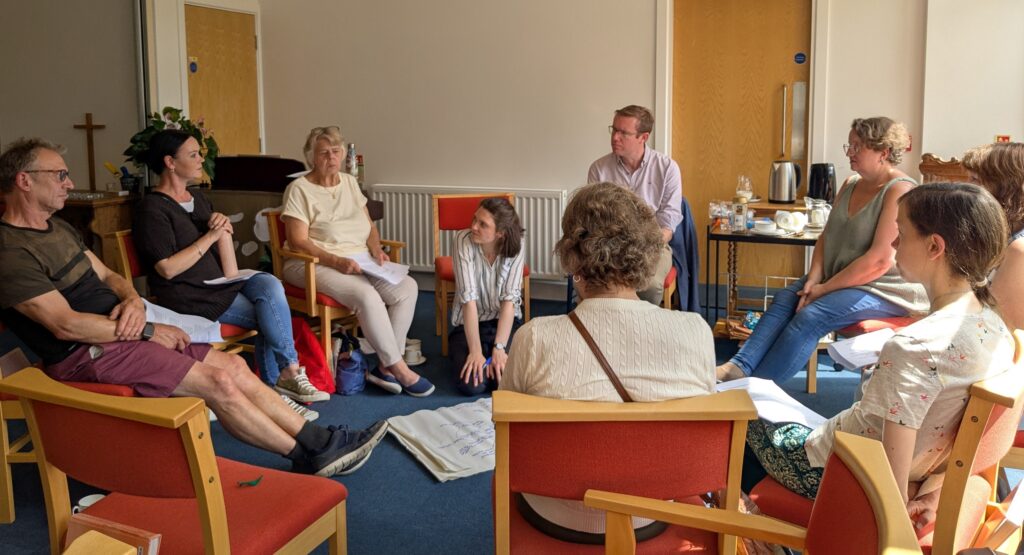
Members at The Core Pantry in Macclesfield have been working with Church Action on Poverty, exploring ways to strengthen their say in how local systems are run and how key decisions affecting their lives are made. They’ve been identifying priorities for action, and using their insights and experiences to speak up about housing, support for disabled people, youth opportunities and more.

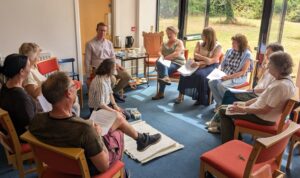
People sitting in chairs in a group discussion circle

We’ve seen repeatedly that food is a brilliant way to bring a neighbourhood together, with members getting to know each other, and forming friendships. We’ve always believed this could be a springboard to a power shift in communities, with people who have been overlooked becoming drivers of positive local change, in the Pantry and in the wider community. 

That’s a big part of our vision at Church Action on Poverty. There are thousands of Pantry members across the UK (in neighbourhoods that have often been neglected or mistreated by those in power) and we want to support them to speak up about their experiences and to help drive change in their communities and in wider society.

But how do we make that next step? To try to find find out, we’ve been running a series of pilot projects, including in Macclesfield, focused on listening. 

The conversations reflect wider national issues. Polling has shown that a huge majority of people (83% across the political spectrum) think local people have ideas for improving their neighbourhood, but only 29% think local and national governments give residents and community groups the freedom they need to implement those ideas.

Surely there must be a way to bridge that divide, and to more effectively encourage and support people to change their neighbourhood for the better. The pilot in Macclesfield gives some cause for optimism.

Across six sessions from March to July, members talked about their communities and identified areas where they would like to see change. Between sessions, participants were encouraged to also have conversations with friends and neighbours about issues that matter to them, to feed back into the discussions. A local councillor and the local MP attended one session each. 

Between them, participants had experience of caring, fostering, disability, bereavement, domestic abuse, emergency accommodation, debt, social exclusion and digital exclusion.

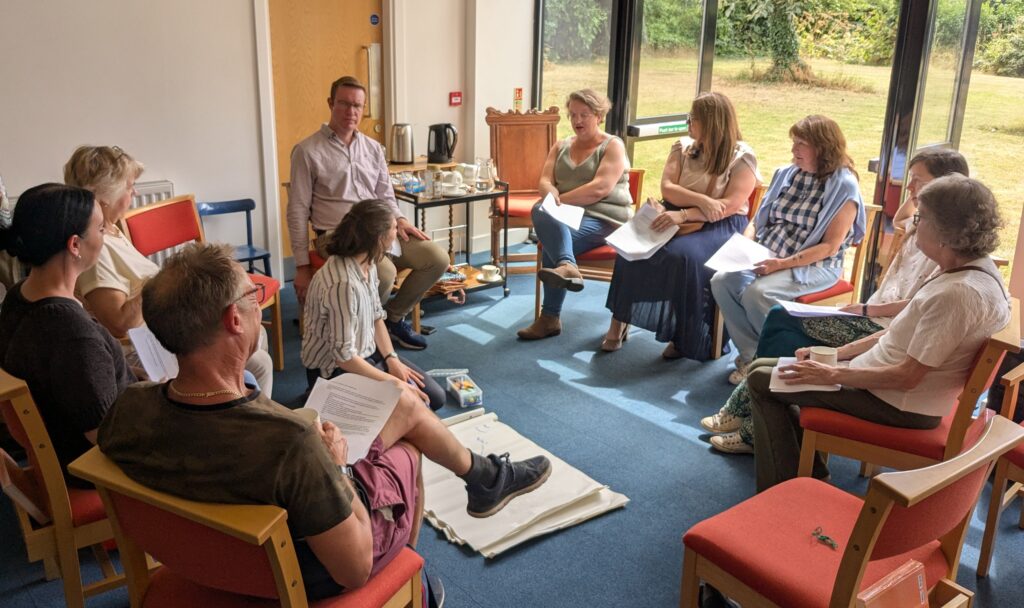
People sitting in chairs in a group discussion circle

Key themes included:

  • Sense of community and social isolation: The group said the Pantry had a strong sense of community and provided important connections. Members struggled to identify a similar sense of community in the wider neighbourhood, but identified many groups across Macclesfield. 
  • Housing support: The group discussed how housing issues impact physical and mental health, and can leave people isolated. One person spoke about how it can be difficult for people to leave abusive relationships because accepting emergency accommodation might mean being separated from their children. Another spoke about a disabled relative who was regularly unable to leave his flat because the housing association would not fix the lift. There was discussion about how difficult the system is to navigate, and the lack of social housing.
  • Financial support: The group discussed debt and credit, the difficulty in accessing reliable support, and the need for financial education from a young age. The group found it difficult to identify many sources of impartial support and advice, and some from the past had closed. 
  • Disability support and health care: People spoke about the need for better support and greater accessibility, including for those with hidden disabilities. They saw a need for a change in social perceptions and understanding about hidden disabilities and mental health. Several people spoke powerfully about experiences when they or their family members did not receive the care they needed, in one case leading to the tragic death of a relative.
  • Support for young people: The group heard of young people dropping out of education because they can’t afford laptops or other equipment that they need. There is also a lack of youth groups locally. 


What did the people involved say about the project?

Everyone who completed a feedback form said they had enjoyed it, including some who had initially been apprehensive. Most said that they were able to speak out and were listened to, and learnt more about where to go locally, and several said that they developed their confidence. One said: “I thought the sessions were very good, there was a lot of knowledge and thoughts being exchanged. I do not leave the house a lot but found I looked forward to the sessions and I was able to be myself and accepted”

Some people also said that they learned that other people shared their concerns and they benefitted from sharing their experiences and listening to each other. Some are interested in carrying out some of the ideas for change, such as creating a leaflet detailing places of support, and continuing to meet to discuss options.

“You're sharing your ideas with each other and hoping it will have a positive impact on the local community and the wider community. I've worked in childcare all my life, I think it's important that we make changes for the younger ones as they go into adulthood, so everything's easier for them to access.”
Sam
Group member
“I like having the opportunity to make change. I want to see big change for young people. It can feel overwhelming, but it felt good, hearing how our MP will follow up. It's encouraging to hear what's already being looked at, and the connections we can make. I'd encourage people in other Pantries to get involved. It's felt good connecting and bonding within the local group, and learning what's out there is good.”
Rachel
Group member
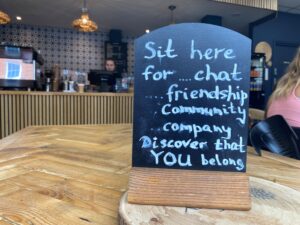
“What I found interesting is the opportunity to connect and listen to other people, and find that I'm not alone as a neurodivergent that's late diagnosed. That was a bit of a revelation! It's extremely difficult for me to access these places because of my own feelings of inadequacy. So being a part of the group has helped break that a little bit. It's given me a little bit of a social aspect as well. But I found it interesting to learn about a place that I've recently moved to. I've only been here about six years and that social isolation is huge…. I'd like to see some of the changes we've discussed rolled out into the wider community. And that change of friendship, so when somebody new comes to the Pantry, we're not afraid to say to them, ”Come and sit with us” to enhance that community feel.”
Jane
Group member
“Our members enjoyed the sessions and the feedback will lead how we approach our wrap-around care provision going forward. “I would like to look at the areas our members believe there are gaps in support in the community. One area looks to be financial support, I can look at providing wrap around care in the Pantry to address this. We have other groups regularly attending the Pantry but this could be extended following this feedback. “The members are hoping to create a leaflet or poster for support in the community. We will promote this with our other members.”
Fabienne
Pantry manager