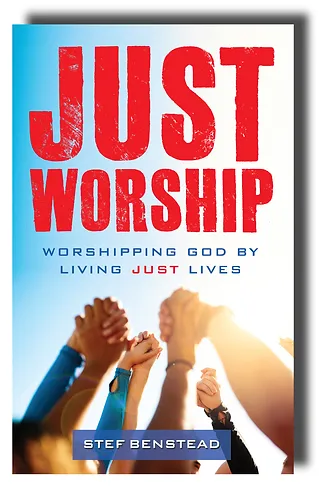
Christianity as a worldview has a lot to say to and about politics. Christianity says that, in the interests of justice and generosity, we should all be on the side of the poor and oppressed against the rich and oppressive. But Christianity also says that the poor and the oppressed are equally capable of sin and of oppressing others; poor people are not good by virtue of being poor. As Aleksander Solzhenitsyn says in The Gulag Archipelago 1918–1956, “The line separating good and evil passes not through states, nor between classes, nor between political parties either – but right through every human heart – and through all human hearts.” If he is correct, then this has political implications that cannot be avoided by such simplistic tropes as ‘religion has no place in politics’.
For Christians, the principles and virtues that God laid down in the Bible are to inform not just how Christians live, but how all people live. When God judges people at the end of this age, he will judge us for the failure to live up to his principles as he revealed them to us, regardless of whether we acknowledge him as Lord or not. That is part of what sin is: the failure to obey God; the decision to disobey him; the harm and injustice caused by our greed and oppression of others contrary to God’s law. The books of the prophets declare God’s anger and judgment against pagan nations for their oppression and injustice. God demands just politics; just processes; just people.
“Lives of justice and generosity are a part of our worship to God”
Indeed, I think that politics is so important to God that worship is not just incomplete but becomes a stench to him without the political virtues of justice and generosity. Lives of justice and generosity are a part of our worship to God, without which the rest of our worship – the formulaic, ritualistic aspects of singing, prayer, Bible reading, and corporate gathering – are just superstitious cults that become blasphemous.
One of the questions I seek to answer in this book is: how did the laws that God gave the Israelites lead to human flourishing and salvation, and how do we apply the same underpinning principles to achieve the same goals today, in our context? In particular, I am writing in the context of the UK, which has (albeit in increasingly denuded form since the 1980s, and in particular since 2010) a welfare state, and a basic appreciation of the role of government in caring for all UK citizens. But it is one thing to understand what God told the Israelites several thousand years ago. It is another to then determine what that means for how we should live today; what are the practical implications for us?
When she’s not asleep, Stef Benstead is an independent researcher in disability and welfare. Chronic illness means that her capacity for activity is limited, and she is dependent on social security for her main income. She is an evangelical Christian committed to working for justice for people in poverty in the UK. She is a former trustee of Church Action on Poverty and a member of Manchester Poverty Truth Commission. She is currently studying for a Master’s in Theology, Community Development and Social Change at the Nazarene Theological College.
This is Stef’s second published book. Her first was Second Class Citizens: The treatment of disabled people in austerity Britain.